When to Visit the Serengeti: A Month-by-Month Guide

The Serengeti is not a destination for a single season—it's a year-round spectacle where nature stages different performances depending on when you arrive. From the dramatic river crossings of the Great Migration to the tender moments of newborn wildebeest taking their first steps, each month offers unique wildlife experiences shaped by rainfall patterns and the eternal cycle of life on the savannah.
Understanding the Serengeti Seasons
The Serengeti experiences two primary seasons that dictate both wildlife movements and visitor experiences:
Dry Season (June to October): Clear skies, minimal rainfall, and prime game viewing as animals congregate around permanent water sources. Vegetation is sparser, making wildlife easier to spot. Peak tourist season with higher prices and more visitors.
Wet Season (November to May): Divided into short rains (November-December) and long rains (March-May). Lush landscapes, dramatic skies, fewer tourists, lower prices, and specific wildlife events like calving season. Some roads may become challenging during heavy rains.

January - February: The Calving Season
Migration Location: Southern Serengeti (Ndutu area) and northern Ngorongoro Conservation Area
Highlights: This is one of the Serengeti's most spectacular periods. Approximately 8,000 wildebeest calves are born daily during a three-week window, creating a synchronized birthing explosion. The southern plains transform into a nursery with hundreds of thousands of wobbly-legged newborns.
Wildlife Action: Predators feast on the abundance. Lions, cheetahs, leopards, and hyenas patrol the plains, while jackals and vultures wait for opportunities. The survival rate is brutal but natural—about 40% of calves won't survive their first few months.
Weather: Short rains typically taper off, but occasional afternoon showers keep the landscape green. Temperatures are warm with pleasant game drive conditions.
Best For: Photographers seeking dramatic predator-prey interactions, witnessing new life, and avoiding peak-season crowds.
March - May: The Long Rains
Migration Location: Central and Western Serengeti as herds begin moving northwest
Highlights: The "emerald season" brings transformation. The Serengeti explodes with life—vibrant green grass, wildflowers, and dramatic storm clouds create photographer's paradise. This is low season with significantly fewer visitors and excellent rates.
Wildlife Action: While the migration disperses as animals spread across the abundant grasslands, resident wildlife remains easily spotted. Bird watching peaks with migratory species arriving. April and May can be challenging with heavy rains potentially making some roads impassable.
Weather: Afternoon thunderstorms are common, especially in April. Morning game drives usually avoid rain, but be prepared for muddy conditions.
Best For: Budget-conscious travelers, photographers who love dramatic skies and lush landscapes, and those seeking solitude.

June - July: The Western Corridor Crossings
Migration Location: Western Corridor and Grumeti River area
Highlights: The dry season begins, bringing excellent game viewing conditions. Massive herds congregate in the Western Corridor, and the first dramatic river crossings occur at the Grumeti River, though less famous than the Mara River crossings.
Wildlife Action: Enormous Nile crocodiles, some up to 16 feet long, wait in the Grumeti River for crossing wildebeest. The buildup of herds creates tension—thousands of animals gather at river banks, with individuals testing the waters before the mass surge begins.
Weather: Dry, clear skies with cooler temperatures, especially early mornings. Dust begins picking up as vegetation dries.
Best For: Witnessing river crossings with fewer crowds than the Mara River, excellent overall game viewing as dry season concentrates wildlife.
August - October: The Northern Drama
Migration Location: Northern Serengeti and Masai Mara (Kenya)
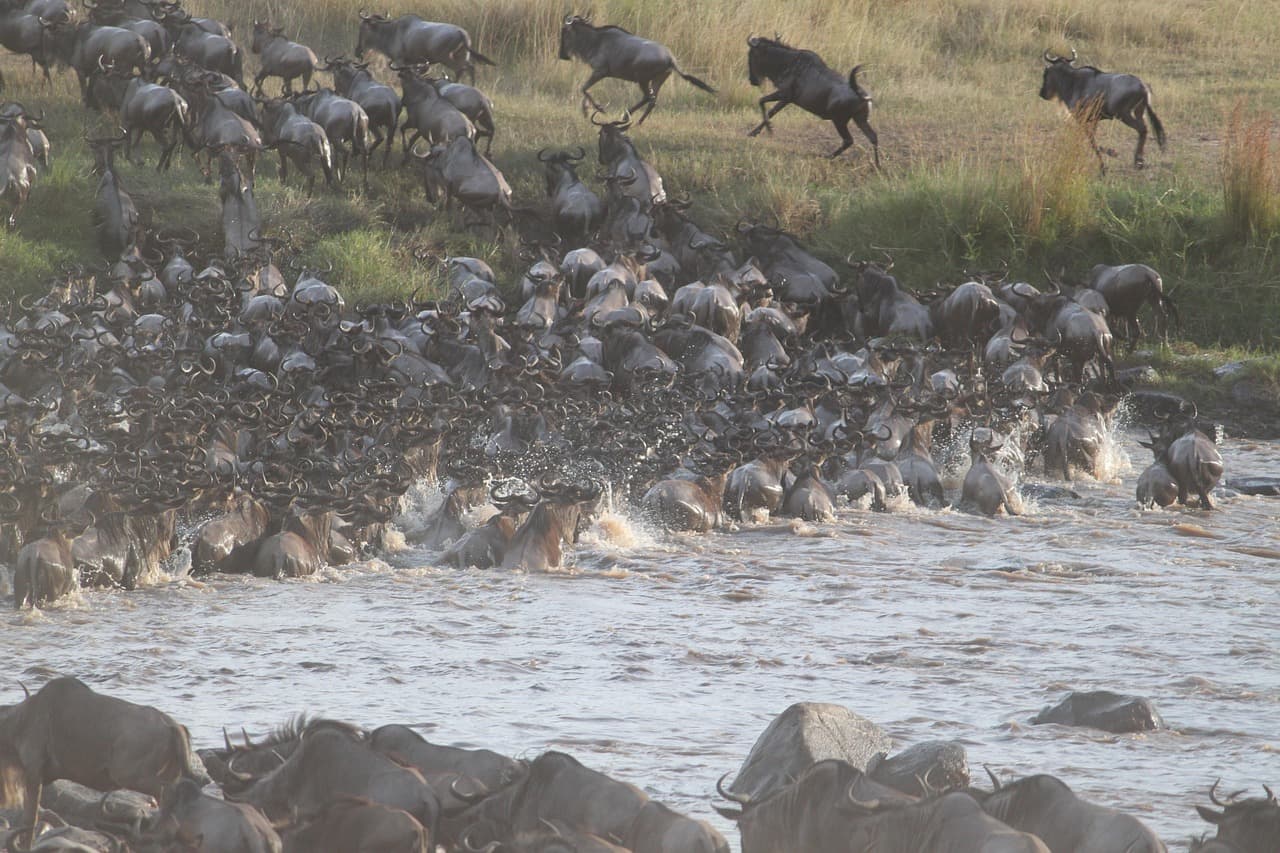
Highlights: Peak safari season delivers the most famous spectacle: the Mara River crossings. Herds cross back and forth between Tanzania and Kenya, creating some of the most dramatic wildlife scenes on Earth.
Wildlife Action: The crossings are unpredictable but breathtaking. Wildebeest and zebras plunge into crocodile-infested waters, struggling against currents while predators wait on both banks. Between crossings, the northern Serengeti offers exceptional predator viewing—lions, leopards, and cheetahs are abundant.
Weather: Peak dry season means dust, sparse vegetation, and excellent visibility. Days are warm, nights can be cool. July-October represent the driest, clearest conditions.
Best For: First-time safari-goers wanting classic experiences, photographers seeking iconic images, and anyone wanting the highest probability of witnessing river crossings.

November - December: The Short Rains Return
Migration Location: Herds begin moving south from the Masai Mara back toward the southern Serengeti
Highlights: The short rains arrive, bringing transitional beauty. The landscape freshens, and tourists thin out considerably. This shoulder season offers excellent value with many lodges offering discounted rates.
Wildlife Action: As herds move south, you can witness massive columns stretching across the plains. November is also mating season—territorial males engage in dramatic battles, and the sound of grunting wildebeest fills the air.
Weather: Short afternoon rains are common but typically don't interfere with morning game drives. The landscape quickly turns green, and temperatures remain pleasant.
Best For: Visitors seeking fewer crowds, good value, and the spectacle of moving herds combined with mating behaviors.
Beyond the Migration: Resident Wildlife

While the Great Migration rightfully dominates Serengeti planning, remember that incredible resident wildlife remains year-round. The Seronera Valley in central Serengeti offers outstanding year-round game viewing with high concentrations of lions, leopards, and cheetahs.
The kopjes (rocky outcrops) scattered across the plains provide permanent homes for lions, leopards, and numerous smaller species. Bird enthusiasts will find over 500 species, with peak diversity during the wet season when migratory birds arrive.
Choosing Your Perfect Time
For River Crossings: August-October (Northern Serengeti)
For Calving Season: Late January-February (Southern Serengeti)
For Fewer Crowds: March-May and November (various locations)
For Best Weather: June-October (dry season)
For Photography: January-February (calving) or March-May (dramatic skies)
For Budget: April-May (low season rates)
For First-Timers: July-October (classic safari experience)
Practical Considerations
Booking: Peak season (July-October) requires booking 6-12 months ahead. Shoulder and low seasons offer more flexibility and better rates.
Duration: Allocate at least 3-4 days for the Serengeti to account for its vast size. A week allows you to follow the migration and explore different regions.
Combining Destinations: Many visitors combine the Serengeti with Ngorongoro Crater, Tarangire, or Lake Manyara for varied ecosystems and wildlife experiences.
The magic of the Serengeti is that there truly is no bad time to visit—only different experiences. Whether you witness the chaos of river crossings, the tenderness of calving season, or the quiet beauty of the emerald wet season, the Serengeti will exceed your expectations and leave you planning your return before you've even departed.